Posts

Showing posts with the label #Vishnu

Vishnuchitta goes to Madurai, Villiputhur becomes Thirvaipadi
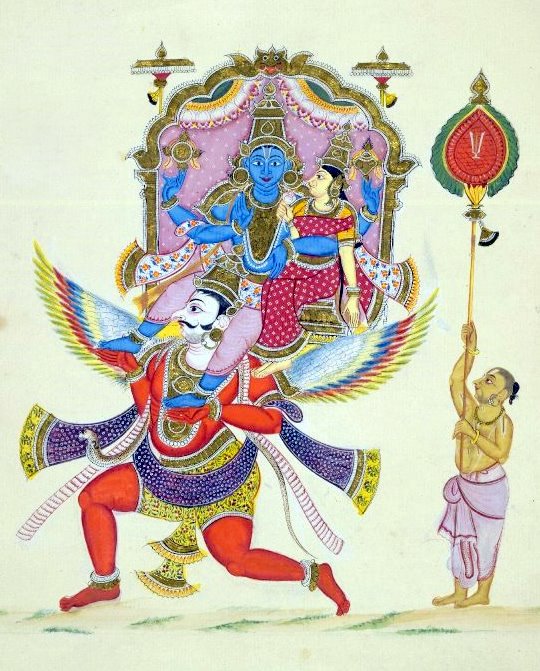
Image
“This joyful practitioner of yoga, Spends all his lawful earnings In providing food for the devotees of Vishnu Who travel between the Himalaya and the Malaya Mountains!”           (Amuktamalyada – translation Srinivas Sistla) That was how the mighty emperor Krishnadeva Raya described our Vishnuchitta. He was hailed as Periyalvar, for the mighty deed of going to the Pandya Sri Vallaba’s court to establishe the Paratva and having had a divine vision of Garudaruda Vishnu and singing ‘Pallandu’ (hail! live long) to Him. This great feat earned not only the title of Periyalvar (Periya = big), but his Prabandham as described by many became the gateway for the divine 4000 verse compilation, ‘Nalayira Diva Prabandham’. In the order of contents in the 4000, 'Tirupallandu' and 'Periyalvar Tirumozhi' are the first prabandhams, followed by 'Tiruppavai' and 'Nachiyar Tirumozhi' of his foster daughter Andal. But, to know him first as V...

"Devam Hayagrivam Aham Prapadhye"

Image
 Hayagriba Madhab Temple, Hajo    Jnananandamayam devam nirmalasphatikakrtim Adharam sarvavidyanam hayagrivam upasmahe   “We medidate upon that Supreme One, who has the neck and face of a horse and who is the embodiment of Jnana, Ananda. He has a Thirumeni like a radiant, blemishless spatikam and is the abode of all Vidhyas.”   This was a verse we learnt as children to recite, especially on the day of Saraswati Puja, and also regularly. Hayagriva as a deity of jnana, wisdom is invoked and his blessings are sought before vidyaramba. Hayagriva, a Vishnu avatara is worshipped by many sampradayas and specifically by the Sri Vaishnavas of south India. Thiruvendipuram near Cuddalore where one of 108-Divyadesas are situated, of the Devanatha Perumal, there exists a Hayagriva temple. It is situated on a small hillock called Aushadagiri overlooking the temple of Devanatha close to the river Gadilam. At a small village called Chettipunyam not very far from Chennai t...

Varaha in the Early Chalukyan caves, temples

Image
                                                                 Badami Cave III  Discussing the ‘Vishnu Cult in Karnataka’ Shrinivas Padigar gives the first epigraphic record to establish that the Badami Chalukyas could have been Vaishnavas or Bhagavatas – the Mudhol copper plate record of Pulekesi I’s son Pugavarma from Malkhed that records renewal of grant to god Varahidevasvamin. This Varaha temple he infers could have existed much before the 6 th century inscription. Their affinity towards Varaha is evident from the fact that the royal emblem of Chalukyas was the boar. The Mangalesa Kalmane or the Mangalesa Cave in Badami records the direct affiliation wherein he is called a “parama bhagavata”. That cave, Badami Cave III has the all important inscription that helps date (dated 578 CE, reign of Kirtivarma...